
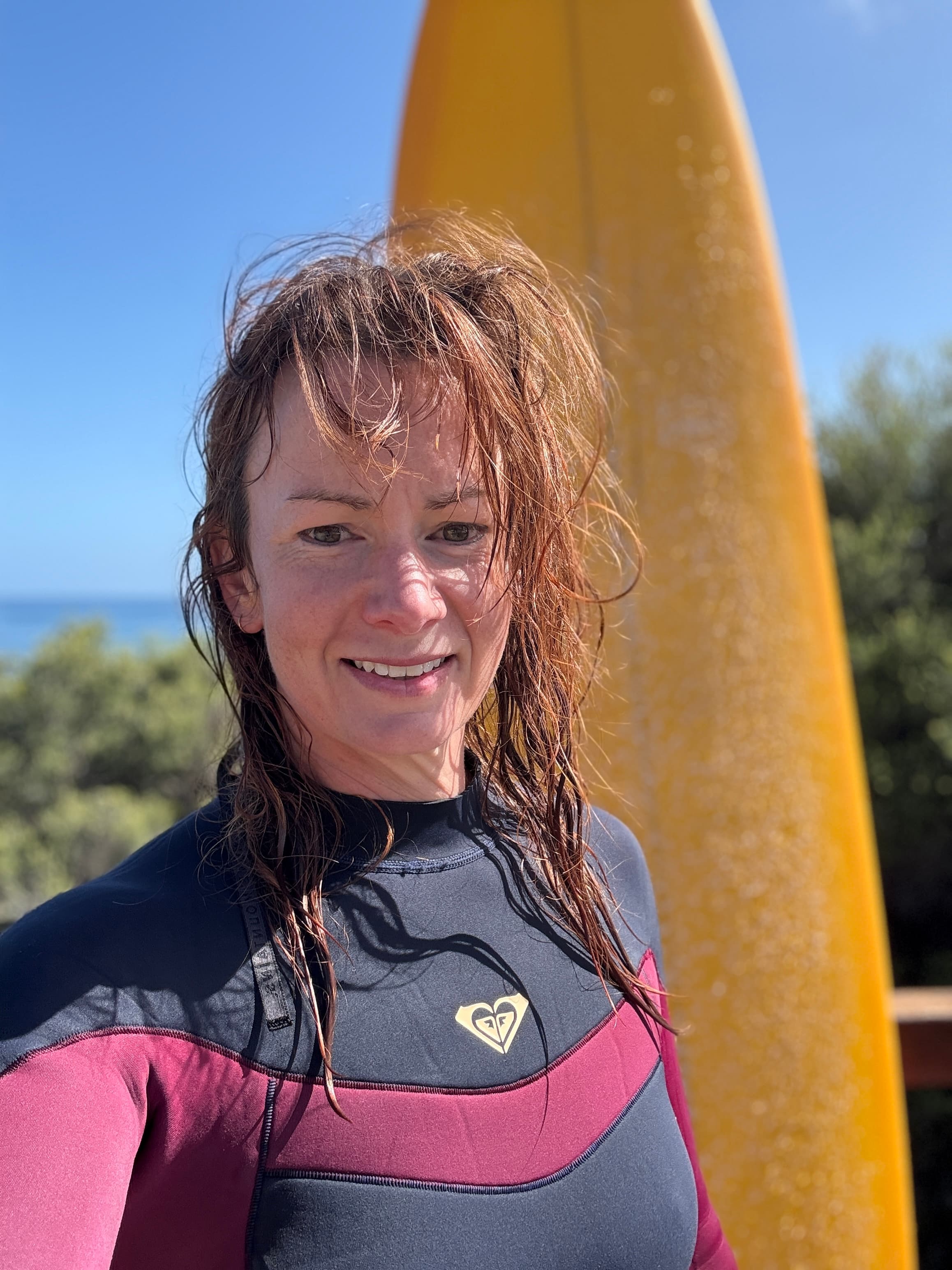
There was a moment this week when my whole life slowed down. Frame by frame, I watched a collision become inevitable. It couldn't be avoided. But in the seconds I had left, I could still change how hard it landed. For this story, and more, read on.
But First, A personal note
June and July found me wintering in Perth, WA. If by wintering I mean escaping the cold of New Zealand by working for the Australian Air Force in a more temperate climate.
As usual, when I spend a block of time with the military, my comms (communications) go down, and my learning curve goes up. As such, I believe it's been two months since I put out a newsletter!
The gap in comms, I hope, is more than made up for by the lessons I can codify and share over the coming months as I get clearer on how to articulate the unique worlds I've inhabited.
Here's to you! Thriving.....not just surviving the complexities of adulting. I see you.
The Near Miss: where unexpected readiness saved my skull
A local surfer named Chris, a clean green wave, and no way for either of us to read the other's path in time. I had a fraction of a second to decide what happened next. I rolled, turned my board into a shield, took the impact, and let it fly rather than hold it.
Nobody was hurt. Later I found the cut in my rail, exactly where my head would have been.
What stayed with me wasn't the move. It was how calm the sequence felt going in. No panic, just assessment, elimination, execution, inside a couple of microseconds. Fifteen years of military conditioning, and I hadn't consciously trained for a moment like it in years. The conditioning never left. It just changed shape.
Read the full story: The Near Miss
The Near MissDecision Making Under Pressure
The moment in the water ran on a sequence I'd drilled long before I ever needed it.
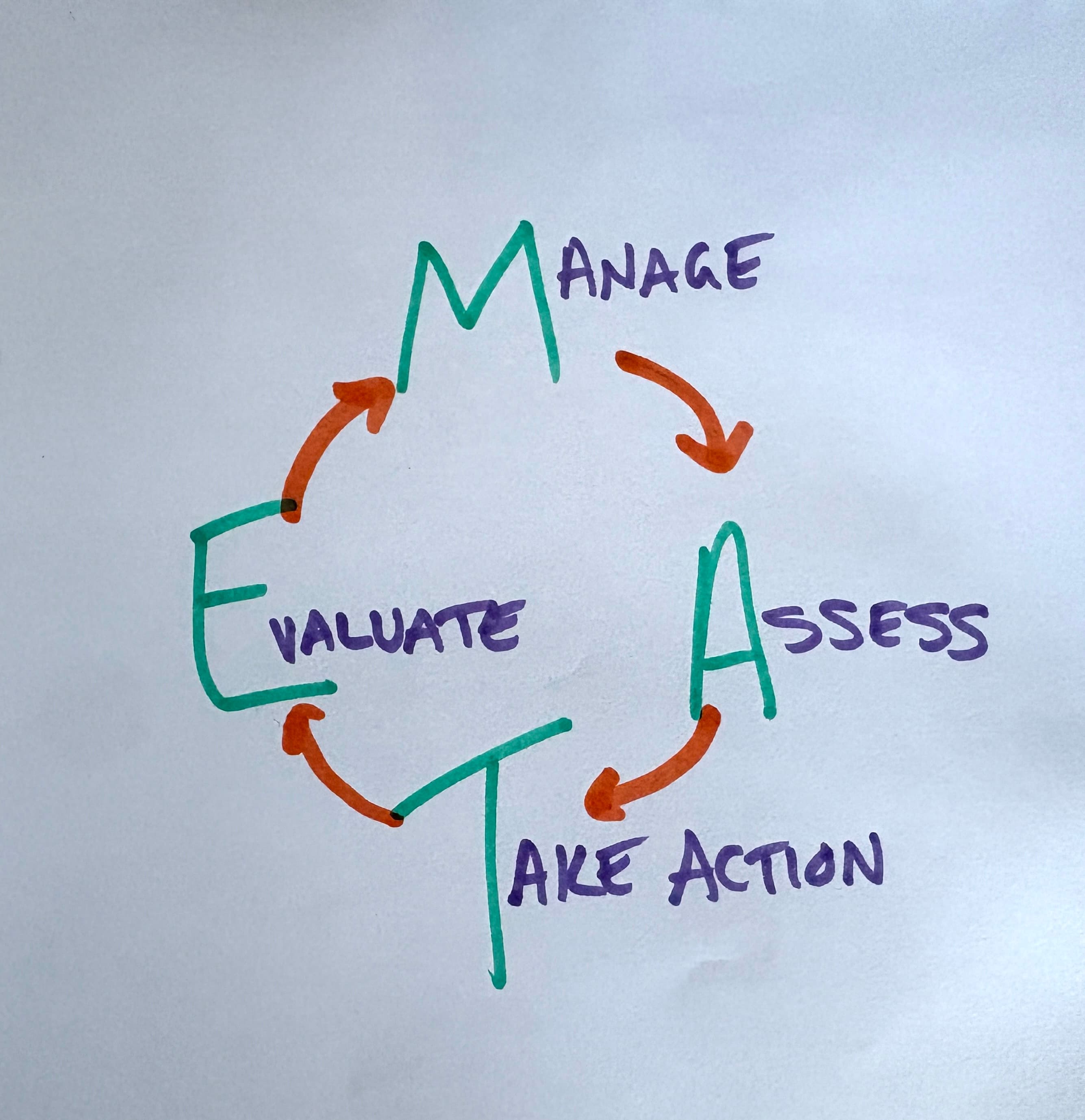
One of the most important skills to develop as a pilot in command is decision making. It's simply called MATE, and every pilot will recognise this in some form. It's built for the exact conditions that make good judgement hardest to access: pressure, uncertainty, or competing demands closing in at once.
I saw it time and time again as a military flying instructor: students in my office for remedial training, not because they were challenged by the "hands and feet" of flying the machine, but because they did not know how to sort through information in a way that would make a timely decision. And 400kph doesn't wait for anybody.
Under pressure, you don't rise to the level of your intent. You fall to the level of your process. The following is the process I was taught in pilot training.
Here's the stack, in order:
MANAGE - the situation. Don't make it worse, don't panic. Fly the aircraft. ASSESS - available information. Then gather the facts that actually matter. What's the state now? Sequence? Consequence? TAKE ACTION - on the highest-leverage move. Not the first option. Not even necessarily the best option. Just act. EVALUATE - Did that move you toward the outcome you wanted? If not, TAKE different ACTION. If so, what's the next step?
The point isn't the four steps. It's that a process exists at all before pressure arrives. Under real load, you don't have the bandwidth to invent a decision framework from scratch. You default to whatever's already grooved in. That's what conditioning actually buys you: not the absence of pressure, but a sequence that's already there when everything else drops away.
Worth trying this week: pick one recurring moment where pressure tends to scramble your thinking, a difficult conversation, a tight deadline, a decision with incomplete information, and run the four steps deliberately, even when the stakes are low. The rehearsal is what makes it available when the stakes aren't.
More to come! I so loved extrapolating flying experience into on-the-ground daily-usable strategies. Watch this space for further ideas on how to adapt the military pilot decision-making model to something you can use every day.
Warmly,
Belinda
Get the next one
The newsletter goes out to people who want performance that holds. No noise, and one click to leave.
Subscribe