
Capability often carries a hidden cost. Spot the early leaks that lead to high-performer burnout so your excellence compounds instead of quietly draining you.
There are rooms that stay with you long after you leave them.
Sometimes it is because something in the room, something beneath the immediately visible competence, reveals itself for a moment.
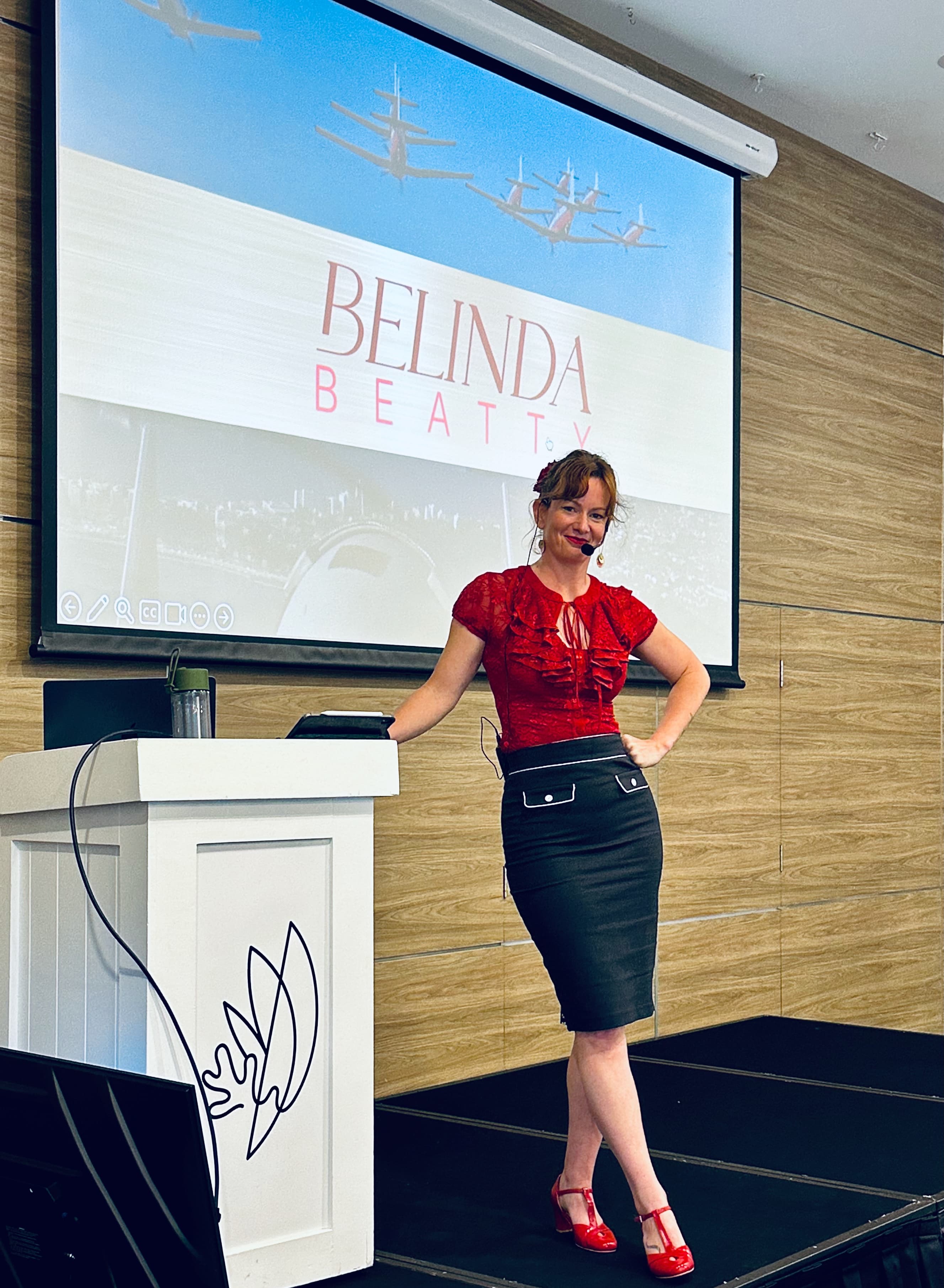
A few weeks ago, I stood in front of a group of high-performing women working in environments where capability is rarely optional and composure is often assumed. I spoke for twenty minutes about why so many capable people achieve extraordinary results while quietly paying for them with sacrifices in other areas of their lives and the gradual depletion of their vitality.
I expected the framework to resonate intellectually.
I did not expect the emotional response that followed.
Afterwards, women quietly found me in hallways and corners and over coffee. Some spoke immediately. Others stood nearby for a while before saying anything at all, as though they were deciding whether what they were carrying could safely be spoken aloud.
And what struck me most about every conversation was this.
Competence was not the issue.
In fact, competence radiated from every woman in the room.
These were women who had learned to operate in systems where preparation matters, mistakes carry consequences, emotional regulation is expected under pressure, and there is often an unspoken awareness that visibility in a male-dominated industry changes the experience of performance.
So they became exceptionally capable.
They prepared thoroughly. They became highly reliable. They learned to read a room quickly and regulate themselves within it.
Many had developed an almost forensic relationship with process and performance. They knew their material. They understood the standards. They knew how to execute cleanly while carrying pressure privately.
And underneath that capability was something else I recognised immediately.
A quieter form of fatigue.
The kind that develops when someone spends years carefully and consciously managing performance, often without fully recognising how much energy is required to maintain the appearance.
I suspect many women operating in high-pressure environments understand this instinctively.
When performance may be scrutinised differently, consciously or unconsciously, adaptation often follows. Preparation becomes deeper. Emotional regulation becomes sharper. Reliability becomes part of identity. Composure becomes part of how credibility is communicated.
Over time, this creates remarkable people.
It can also create systems where results are achieved by continually drawing energy from the individual rather than deliberately building it.
That distinction matters.
Because many high performers stop noticing the cost while they are inside it. Hypervigilance begins to feel like professionalism. Exhaustion becomes evidence of commitment. Emotional suppression becomes confused with leadership.
The ability to continue carrying a load creates the impression that the load itself is sustainable.
But the body keeps its own records.
Eventually, it begins communicating what the identity has learned to overlook.
This way of operating produces results. It also carries a cost.
What fascinated me, both in the room and in the research surrounding this work, is how strongly modern science now supports many things humans have intuitively known for a very long time.
Positive experiences matter.
Connection matters.
Recovery matters.
The environments we repeatedly place ourselves inside shape our capacity to think, feel, decide and perform.
Research from the University of Warwick demonstrated that happier individuals were approximately 12% more productive, while Gallup research has repeatedly linked energised and engaged teams with higher productivity, lower absenteeism and stronger profitability outcomes.
Regulated nervous systems make better decisions.
They recover faster, interpret situations more accurately, access broader thinking, remain socially connected under pressure and sustain effort with less degradation.
The chemistry changes first.
Performance follows.
This is often where capable women unintentionally place themselves at the bottom of the priority list.
Energy is largely invisible.
Nobody applauds the walk outside. Nobody promotes us for sleeping well. Few performance reviews ask whether we protected recovery, sought connection, or created enough space between competing demands.
The visible work receives attention.
Preparation. Execution. Composure. Command.
Meanwhile, the conditions supporting that performance are quietly traded away to maintain it.
This is one reason I built the diagnostic the way I did.
I wanted to make the invisible visible.
Because when people who deeply value competence and performance under pressure can suddenly measure clarity, recovery, emotional regulation, decision quality and capacity, something shifts.
The conversation changes.
Those actions stop feeling peripheral.
They become strategic.
They become part of the architecture that maintains performance. Vital. Urgent.
What I often see when people complete the diagnostic is not a lack of discipline, ambition or capability.
I see energy leakage.
Small, repeated forms of depletion that slowly narrow cognitive flexibility, emotional capacity and recovery until the entire system begins relying on force to maintain output.
The beautiful part is that the reverse is also true.
Small moments of restoration compound.
Morning sunlight while drinking coffee before everyone wakes. Music in the kitchen. A walk without a phone. Three deep breaths before the next meeting. A conversation with somebody who understands your world without explanation. Thirty seconds spent acknowledging an achievement before racing towards the next objective.
Viewed individually, these moments appear insignificant.
When repeated consistently, they begin to change the baseline state of the system.
Capacity grows.
Recovery accelerates.
Perspective widens.
Performance begins to compound.
What I most wanted those women to hear was this:
Their competence was extraordinary.
And competence expands when it is supported by the right conditions.
Because performance is not simply something we produce.
It is something we build.
The more pressure we carry, the more responsibility we hold, and the more friction we encounter, the more deliberately we must create the conditions that restore what pressure consumes. Those conditions determine whether performance remains dependent on effort alone or begins to compound over time.
Sometimes that process begins with something almost embarrassingly small.
A pause.
A breath.
A moment of sunlight.
A conversation that reminds us we are understood.
Five minutes where the nervous system is no longer preparing for impact.
Small moments.
Repeated often enough that the body begins to trust the environment again. And from there, something subtle changes.
Energy becomes more available. Recovery becomes faster. Capacity expands.
The same capable woman who once relied entirely on effort begins discovering there is far more available to her than endurance alone.
More capacity to create the extraordinary.