Skill hibernates, it doesn't expire. A return to the cockpit shows why real high performance isn't a peak moment but core capacity that travels everywhere.
Six years away from the cockpit is a long time.
Long enough to raise two children, build a business, and learn entirely new kinds of leadership. Long enough for the sharp edge of military precision to soften, replaced by the blur of competing priorities, a young family, and a lazy surf-town lifestyle.
When the idea of returning first surfaced during a chance conversation with the incoming Commanding Officer (CO) of Number 2 Flying Training School (2FTS), it felt both exciting and improbable. But in the middle of the night, with my mind working through possibilities, excitement turned to doubt. What if my brain wasn’t sharp enough to keep up with the learning curve anymore?
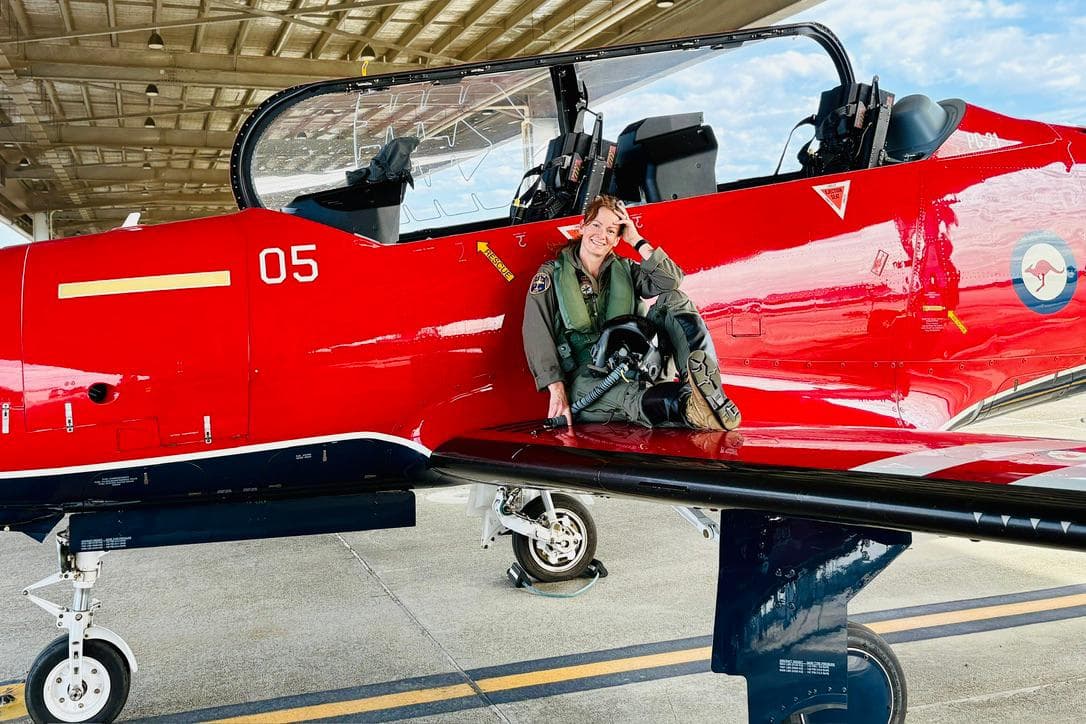
The PC-21, described by the RAAF as the world’s most advanced pilot training aircraft, is a demanding machine — 68% more powerful than the PC-9 and capable of cruising over 300 knots. Every decision counts. The pressure to perform as I once did, and the fear that I might not, were very real. But my heart had decided. I wanted to feel the rush of flight again.
I hit the learning curve head-on, and at times, I struggled to keep up. The aircraft conversion phase was intense, and the systems were complex. I was learning to fly with a HUD, operate a fully integrated glass cockpit, and manage a synthetic training environment, with enough power at my fingertips to send us vertical, or pull 8G before I had time to think.
I drilled checklists on audio in the car. I memorised emergency actions.
Slowly, my focus sharpened. The rhythm returned.
And with it came the realisation that skill doesn’t disappear; it lies dormant, waiting for the courage and conviction to wake it.
In September 2025, I (re)qualified as a QFI (Qualified Flying Instructor) and SIM IP, on the PC-21.
Over the past few years, while building a business and raising a family, I have been obsessed with understanding how to deliver high-performance results across a wide range of endeavours. And I have come to a clear realisation.
Consistent high performance is not about results at a single visible edge, but about capacity built from the core. When the core is strong, effort becomes sustainable and multidirectional, and results follow across multiple domains.
What surprised me most about returning to the cockpit wasn’t whether I could still fly. It was how aware I had become of the human patterns, and the human cost, of traditional models of sustained high performance.
Specifically, time away has deepened my understanding of what it takes to deliver high-performance results over the long term across all areas of demand.
Precision flying is not just technical; it is biological, psychological, and deeply human. It is about clarity under pressure, emotional regulation, and the ability to reset one’s state while airborne. It is also about maintaining a physiological edge, rapid recovery, and awareness of purpose and priority. These are not “flying skills.” These are human performance skills.
Returning to the PC-21 not only challenged my flying skills but also tested my ability to perform under pressure across all areas of my life — within the Squadron, at home, and in business. Given my multiple roles, high performance could no longer be peak output at one edge; it had to become sustained capacity at the core, expressed everywhere.
…….
Being back in the cockpit feels like coming home to a part of myself I thought I had left behind. I expected to earn trust gradually as the “new” face in the unit, but instead I’ve been met with immediate moments of gratitude from trainees. I’d forgotten the influence we wield when teaching not only the technical but also the human skills of flying and performance.
Recently, after a sortie debrief, one young pilot lingered. He extended his hand — an unusual gesture in this setting — and said, “I just wanted to say thank you, Ma’am. Really, thank you. This was the most valuable training flight I’ve ever had.”
His words filled me with awe at the privilege and responsibility we have of shaping the next generation of RAAF pilots on this powerful high-performance aircraft. Not only must we train their technical and warfighting skills, but we must also train them in the levers that enable sustainable, consistent, high-performance lives.
For women returning to aviation after children, career changes, or time away, my message is this: your skills are still there. They’re waiting, like muscle memory, for you to trust them again. When we fully inhabit our presence, claim the confidence to take the controls, and trust our bodies to keep learning, we do more than maintain capability; we deepen it. More importantly, the industry needs our multidimensional performance, our steadiness, and our broad perspective. It is our life experience that strengthens our capability.
In a world that often rewards unsustainable effort at the edge, it is depth at the core that will deliver us consistent, sustainable high performance across the aviation industry and beyond – wherever our dreams unfold.
…………………………..
In May, I will be speaking on Education Day at the AWPA National Conference in Airlie Beach, sharing more about the Core Power Operating System: a system for measuring high-performance skills and strategies! I hope to see you there!
………………………………………
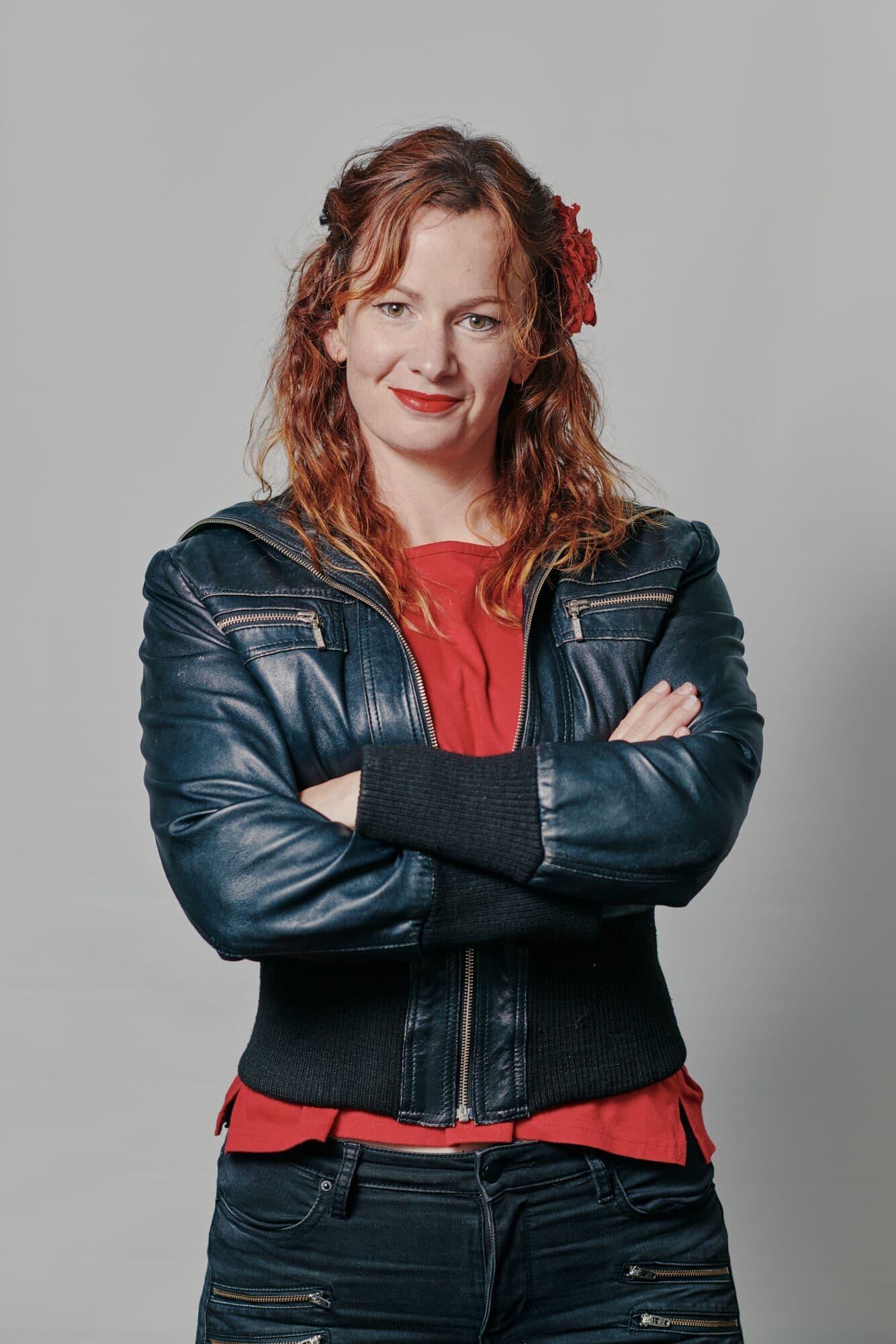
Belinda Beatty is the authority on internal performance architecture, teaching others to thrive under pressure, not just survive it. An Air Force pilot and burlesque performer, Belinda operates at the rare intersection of elite systems and human artistry. Her work decodes the system conditions that sustain energy, sharpen execution, and amplify influence — designing the internal architecture for Performance that holds, at every edge.
Connect with Belinda at https://www.linkedin.com/in/belinda-beatty/
To access resources for high-performing humans, or for more information, check out www.belindabeatty.com