Micro-risk flips dopamine into a learning flare, not just a motivational hit. How small doses of danger tighten feedback loops and prime you for the next move.
The Art of Learning at Speed
There’s a joy I feel on some mornings, a micro-positive sensation that sweeps my body just after 9 am on weekdays.
No, it’s not that I’ve just dropped my children at school and the day lies ahead of me, spacious and full of potential. It’s not that… although it would be understandable if it were.
No, there’s something else.
A dirty little secret. An indulgence. A vibration of anticipation for what I’m going to do next.
I pack my computer bag. It’s a slung-over-the-shoulder bag, not a corporate carry-handle. No, that wouldn’t work for what I’m about to do.
I put on sensible shoes. Sneakers. Usually dirty.
I adjust my bag a few times. Will it stay in position? If it swings too far from my body, I could lose my balance and fall.
I do a quick environmental assessment. The pavement is dry.
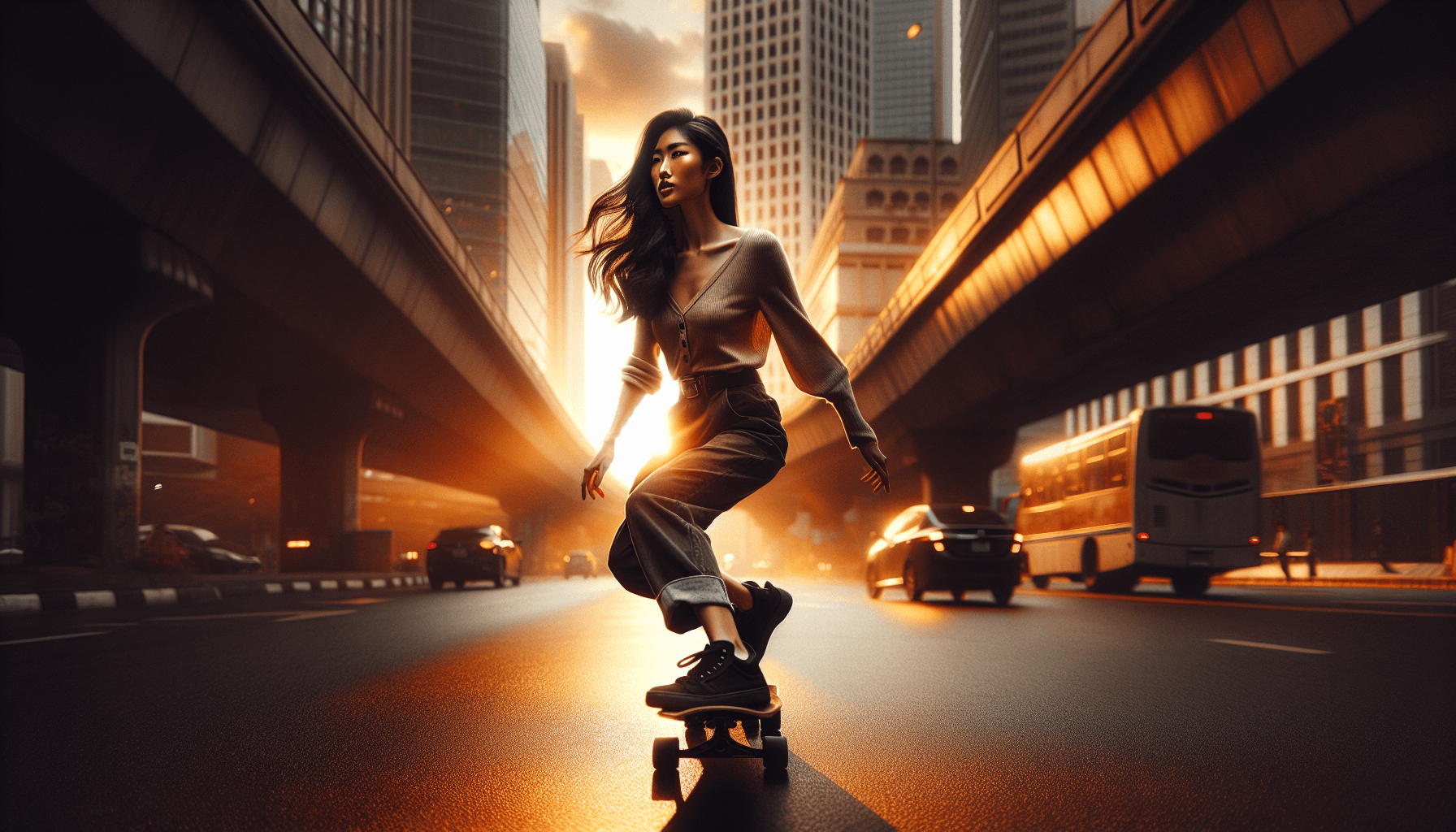
I grab the skateboard. It’s a Sector 9 longboard, a cruiser. Larger wheels, lazy turns, minimal deck curvature. More forgiving for an adult learner.
I was never cool enough to skate at school. I was more the academic kind. The kind that would have been laughed at for having a skateboard in hand.
But now… as an entrepreneur in a small town in rural New Zealand, I can do as I please.
And I wanted to learn to skateboard.
Not to do tricks or drop into the bowl, but to get myself to town and back in a way that felt fun, playful and challenging.
It lit me up with joy.
That sparked my curiosity.
Why does something so simple and childish add so much vibrance to my day?
This is what I discovered.
Every time I lean into a corner, something very specific happens in my brain.
I am slightly off balance. The outcome is uncertain. The margin for error is real.
My brain recognises this instantly.
Pay attention. This matters.
And it releases dopamine.
Not as a reward but as a signal. Dopamine is the brain’s way of marking moments that require learning. Moments where what just happened did not perfectly match what was expected. A fraction too fast. A fraction too wide. A fraction too late.
That gap… between expectation and reality… is where learning lives.
And cornering creates that gap, over and over again.
Each turn becomes a loop. Action. Error. Correction. Update.
Repeated in real time.
This is why it feels so good. Not because it is easy. But because the brain is engaged in what it was designed to do.
Learn.
Refine.
Adapt.
At speed.
This is not just about skateboarding. Any kind of cornering will produce this same neurochemistry. Children seem to know this intuitively. Bikes, skates, go carts, contraptions with wheels.
This angular acceleration is how we build performance.
Because most of life does not give us feedback like this.
The signals are slow. The errors are vague. The corrections are delayed.
So we default to effort.
Push harder. Try more. Do more.
But effort is a blunt tool. What actually drives improvement is not effort, it is the speed and quality of feedback. The ability to detect error… and adjust.
Cornering trains this.
It sharpens attention. It accelerates learning. It builds confidence under uncertainty. That’s adult neuroplasticity in action. And without realising it, you are upgrading the system that produces your performance.
So the next time you lean into a turn, notice it.
The edge. The adjustment. The correction.
That moment where it almost doesn’t work…..and then it does.
That's dopamine and neuroplasticity.
And it feels like vibrance.
Both of these enrich our lives and leave our system alert, replenished and primed for performance.